The Baofeng UV-5R, emergency communications, and the difference between buying preparedness and actually being prepared.
A friend of mine, about a generation younger than me, recently asked if he could buy a handheld ham radio and use it to talk to me.
He lives about four hours north of me, up in northern Florida.
He sent me a picture of a Baofeng UV-5R, one of those inexpensive little handheld radios that seem to be everywhere in the preparedness community.
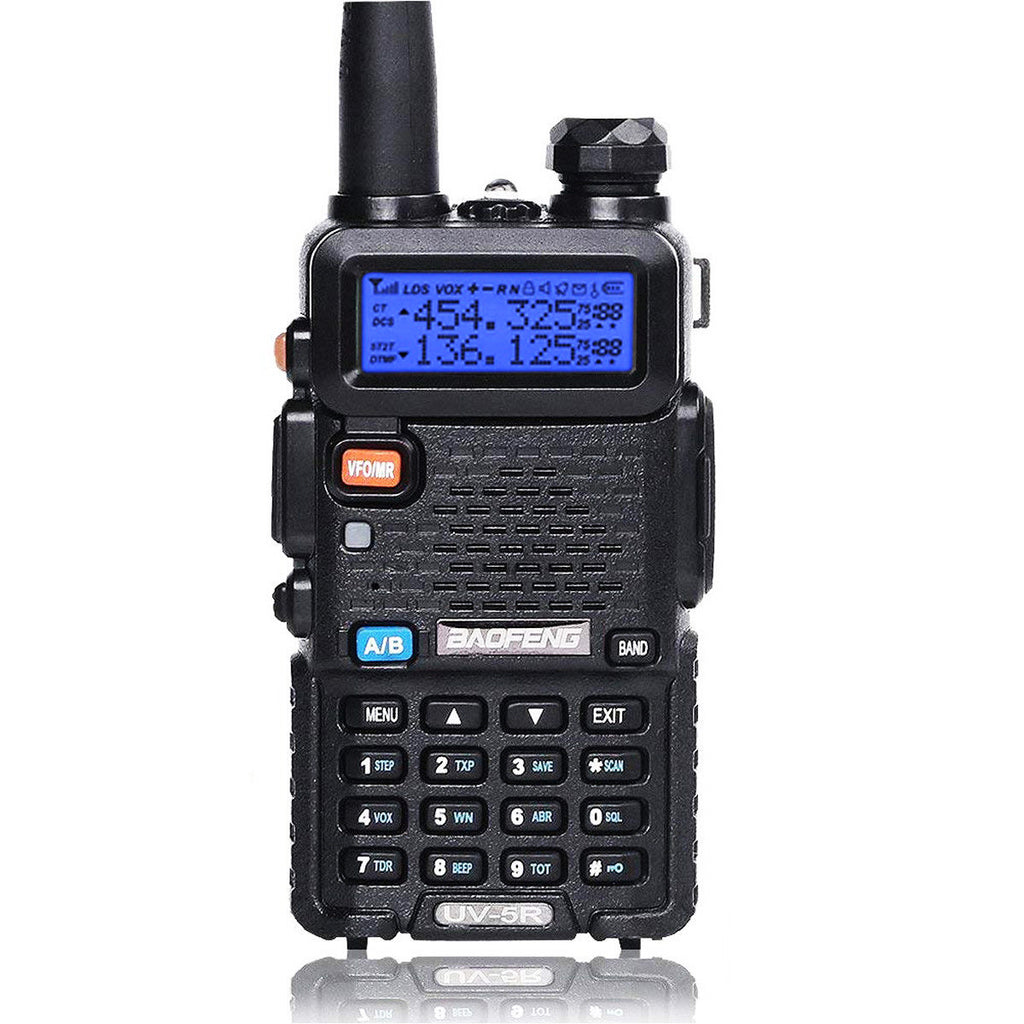
“Will this work to talk to you? All I need?”
Well, no.
And that’s where this story starts.
The Baofeng UV-5R is a perfectly serviceable little entry-level radio. You can pick one up for around $25 to $35, depending on the model and accessories. It’s capable of operating on amateur VHF and UHF frequencies, and under favorable conditions, especially using repeaters, you can communicate over some pretty respectable distances.
But talking directly to somebody 200 miles away?
Not likely.
Not without some additional infrastructure, and certainly not just by pulling it out of the box and pushing the button.
I explained that to him, along with the fact that transmitting on amateur frequencies generally requires a license.
His response was interesting.
He wasn’t trying to become a ham radio operator. He wanted a way to communicate if the grid went down. Somebody had apparently introduced him to the idea of emergency communications, and the solution presented was simple:
“Buy this radio. When the shit hits the fan, you’ll be able to talk to anybody you want. For free.”
Well.
That’s partially true.
And partially true is sometimes more dangerous than completely wrong.
The $25 Illusion of Preparedness
I’ve been watching something interesting happen over the last few years.
Several of my younger friends are reaching the same stage of life I was in when I started Florida Hillbilly.
They’re starting to look at the world differently.
They’re thinking about their families, their responsibilities, their independence, and what happens when the systems we’ve grown accustomed to depending on suddenly stop working.
They’re asking questions about food, water, power, communications, and self-sufficiency.
Questions I was asking myself years ago.
I’m watching them travel down some of the same roads I traveled, occasionally hitting the same potholes.
And I recognize the scenery.
There’s a fairly predictable progression when somebody first becomes interested in preparedness.
First comes the realization that something could go wrong.
Then comes the desire to do something about it.
And then, almost immediately, comes the shopping.
Generators. Solar panels. Water filters. Emergency food. First aid kits. Radios.
Lots and lots of radios.
There’s an entire industry built around selling people the feeling of being prepared.
And I’m not suggesting the equipment is worthless. Far from it. I’ve owned, used, tested, broken, repaired, and occasionally regretted purchasing plenty of that equipment myself.
But somewhere along the way, I learned an important distinction.
Owning equipment isn’t the same thing as possessing the ability that equipment is supposed to provide.
You can own a chainsaw without knowing how to fell a tree.
You can own a rifle without knowing how to shoot.
And you can own a radio without having the slightest idea how to communicate with somebody when you actually need to.
The equipment is the easy part.
So, Is the Baofeng UV-5R Worth Buying?
Actually, yes. With caveats.
For the money, it’s a remarkable little piece of equipment.
The UV-5R helped make amateur radio accessible to people who weren’t interested in spending hundreds of dollars just to find out whether they enjoyed the hobby.
It can receive a variety of radio traffic within its supported frequency ranges, and licensed operators can use it to communicate on amateur VHF and UHF frequencies.
With an appropriate repeater, you might reach people dozens of miles away. With linked repeaters or internet-connected systems, you could potentially talk to someone across the country.
But here’s the catch.
That $25 radio doesn’t magically give you access to all those capabilities.
You have to know which frequencies to use, which repeaters are available, how they’re configured, whether they’re operational, and whether the person you’re trying to reach can access them.
And if the infrastructure supporting your communications goes down, some of those capabilities disappear with it.
A handheld radio is generally a short-range, line-of-sight communications tool. Terrain, buildings, antennas, elevation, and local conditions make a tremendous difference.
That claimed 20-mile range? Maybe, under favorable circumstances. Across flat ground between two handheld radios at ground level, you may get considerably less.
The radio isn’t lying to you. The advertising just isn’t telling you the whole story.
And yes, I would recommend one to somebody genuinely interested in learning amateur radio.
I wouldn’t recommend buying one, tossing it in a drawer, and assuming you’ve solved your emergency communications problem.
“But I Won’t Need a License When Everything Falls Apart!”
That was another part of our conversation.
My friend figured that in a national emergency, nobody would be worried about whether he had an amateur radio license.
And there’s more than a grain of truth in that.
FCC amateur radio rules provide exceptions for certain emergency communications involving immediate threats to life or property when normal communication systems are unavailable.
But a declared emergency doesn’t automatically turn every unlicensed person into a legal ham operator.
More importantly, that’s not even the point.
Imagine you’ve never driven a manual transmission.
Somebody hands you the keys to an old pickup truck and tells you that if there’s ever an emergency, you’re welcome to use it.
Great.
Now imagine the emergency arrives, your family needs to leave immediately, and you’re sitting there trying to figure out what the third pedal does.
That’s a pretty lousy time to learn.
Radio is no different.
If you’ve never programmed a repeater, adjusted your squelch, selected the proper offset, or figured out why nobody can hear you, the middle of a hurricane while your loved one is bleeding out isn’t the ideal time to start experimenting.
And if you think learning to use a radio under ordinary circumstances is frustrating, try doing it in the dark with no electricity, no internet, and somebody depending on you.
The license isn’t the important part of emergency communications. The knowledge and experience you gain while earning and using it are.
The license simply opens the door to practicing legally.
Ham Radio Licensing Isn’t Some Great Government Money Grab
This is another misconception I hear occasionally.
People seem to imagine that getting an amateur radio license involves expensive classes, complicated government bureaucracy, and some kind of technical examination that only electrical engineers can pass.
Not even close.
In the United States, amateur radio licensing has three levels.
Technician, General, and Amateur Extra.
The Technician license gets you started with substantial VHF and UHF privileges, including the bands used by radios like the UV-5R.
General opens up significantly more access to the HF bands, which are particularly useful for long-distance communication.
Amateur Extra provides the broadest amateur operating privileges.
The question pools and answers are published. You can study them before taking the tests.
An examination session commonly costs up to $15, although some organizations offer reduced or free testing. The FCC also charges a $35 application fee for a new amateur license.
That’s hardly an outrageous barrier to entry.
And the people administering those tests?
Usually other amateur radio operators volunteering their time.
I’ve found that most hams are delighted to see newcomers getting involved, particularly younger people.
There’s also a considerable population of military veterans in amateur radio, which has always been one of the things I’ve appreciated about the community.
You meet some interesting people.
But the best part isn’t passing the exam.
It’s what comes afterward.
There’s another reason amateur radio licensing matters, one that doesn’t get nearly enough attention.
Radio spectrum is valuable real estate. The FCC needs to understand who’s using it and how, and licensing helps establish an identifiable community of amateur operators.
And believe me, there’s no shortage of commercial interests that would love to get their hands on more spectrum.
I’ve come to think of amateur radio frequencies as the Central Park of the airwaves.
Prime real estate, set aside for people to use and enjoy without somebody charging admission every time they turn around.
And just like Central Park, you can bet there are people who would love to carve off a piece of it and find a way to make money.
Amateur radio operators don’t own those frequencies, but an active, licensed community helps demonstrate why preserving them for public use matters.
That’s another good reason to get licensed, get involved, and actually use the bands.
What About CB Radio?
My friend also mentioned knowing CB operators who talk to people in other states without needing a license.
He’s absolutely right.
Citizens Band radio operates around 27 MHz, and under the right atmospheric conditions, signals can travel hundreds or even thousands of miles.
It’s called skip, and it’s one of the more fascinating aspects of radio propagation.
But there’s a problem.
You don’t get to decide when the atmosphere cooperates.
You might be able to talk to somebody in Ohio one afternoon and be unable to reach somebody two counties away the next.
CB has legitimate uses. It’s inexpensive, accessible, and doesn’t require an individual FCC operator license for ordinary domestic operation.
For local communications, especially with a decent antenna and a properly installed mobile or base station, it can be useful.
But if your emergency communications plan depends on reaching one particular person, at one particular location, at one particular time, relying on atmospheric conditions isn’t much of a plan.
And this is where understanding radio becomes more important than simply owning one.
Different frequencies behave differently.
VHF and UHF are generally useful for local communications.
HF can provide regional and long-distance communication by using the ionosphere, although frequency selection, time of day, solar activity, and antenna configuration all matter.
Higher frequency doesn’t automatically mean greater distance.
In fact, some of the best long-distance amateur communications happen on frequencies considerably lower than those used by the UV-5R.
There’s an entire world of fascinating stuff to learn here.
Which brings me back to my original point.
The Most Important Piece of Emergency Equipment Is Between Your Ears
I’ve lived through hurricanes.
I’ve lived through extended power outages when it was 90°F outside with 98% humidity, as well as when it was 27 degrees below zero.
I’ve watched communications systems fail, recover, and sometimes continue functioning when people expected them to collapse.
And over the years, my perspective on preparedness has changed.
When I first became interested in self-sufficiency, I spent a lot of time thinking about what I needed to own.
Today, I spend more time thinking about what I need to know.
And more importantly, WHO I know.
Part of why we moved back to Florida after living in Alaska was the circles of people here who make up our support system, in good times and bad.
Those relationships are every bit as important as anything I’ve got sitting on a shelf.
That’s not to say I don’t appreciate good equipment.
I do.
But I’ve learned that equipment without knowledge is frequently just expensive clutter.
And sometimes the knowledge reveals that you don’t need nearly as much equipment as you thought.
Take emergency communications.
Before buying anything, ask yourself a few questions.
Who exactly do I need to communicate with?
How far away are they?
What communications systems are likely to remain operational?
What happens if those systems fail?
Does the person on the other end have compatible equipment?
Do we know when and where to listen for each other?
Have we ever actually tested this?
That last question is a big one.
Because two people owning radios doesn’t mean those two people have a functioning communications plan.
It means they own two radios.
Not Sure What Kind of Radio You Actually Need?
That’s exactly why I put together the Emergency Communications Finder.
Answer a few questions about who you’re trying to reach, how far away they are, and whether normal communications are working. It’ll help you narrow down the kind of equipment and communications system that makes sense for your situation.
You might need a handheld ham radio.
You might need a full HF station.
You might not need another radio at all.
Try the Emergency Communications Finder
Figure out the problem first. Then buy the solution.
The Funny Thing Is, He Got Me Thinking About My Own Preparedness
Here’s where the story gets a little embarrassing.
I’m an Amateur Extra-class radio operator.
My call sign is KW4LG.
I’ve spent plenty of time around radios, repeaters, antennas, and the amateur radio community.
I know how this stuff works.
And yet, somewhere along the way, life happened.
Other interests took priority. Other projects demanded attention.
I haven’t been nearly as active on the air as I once was.
And while I was explaining to my younger friend why he needed to develop the skills before depending on the equipment, I started thinking about my own station.
Maybe it’s time to put up another J-pole antenna.
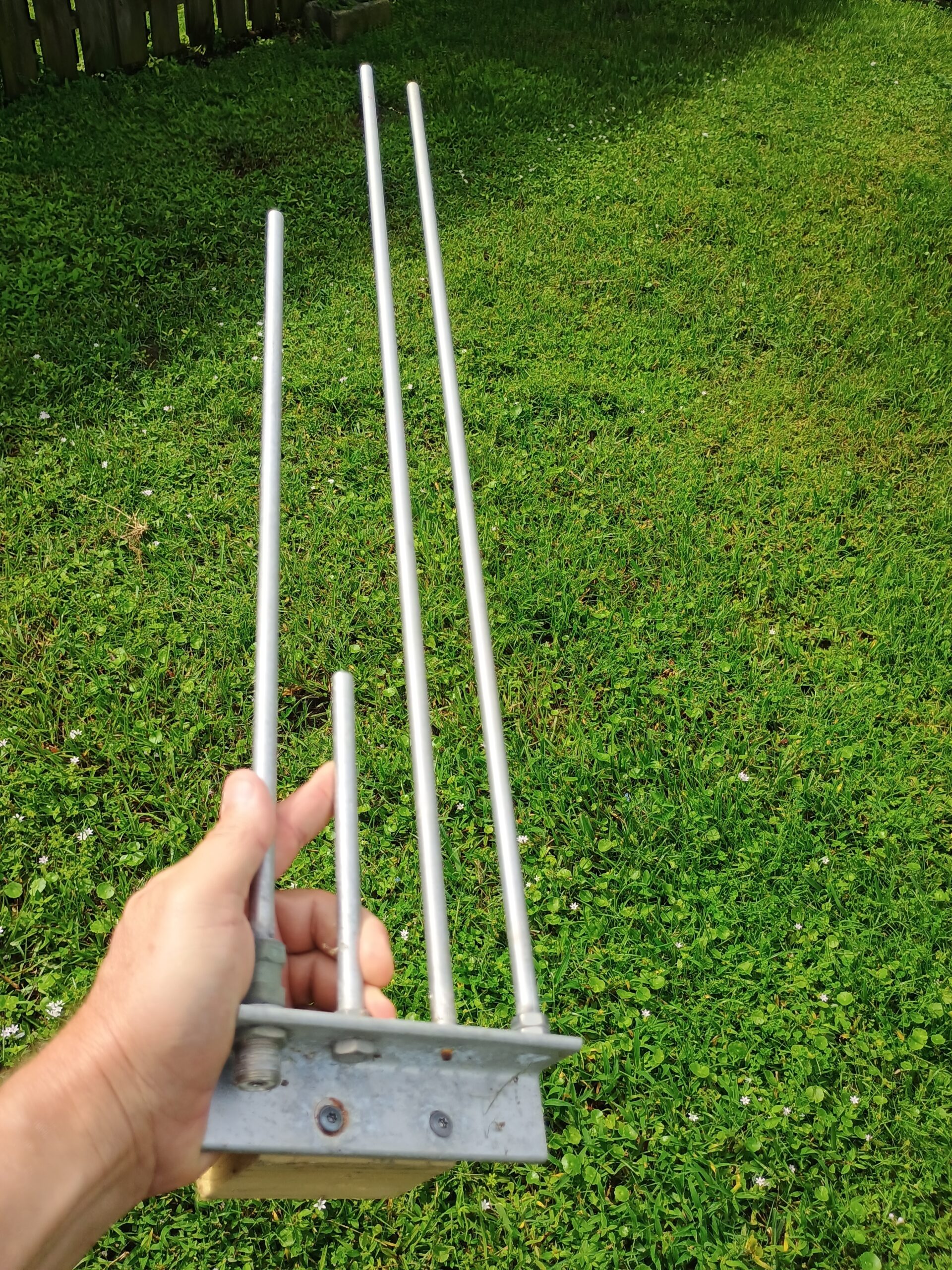
Maybe it’s time to start checking into the local weekly nets again.
For those unfamiliar with the term, a net is an organized gathering of amateur radio operators on a particular frequency or repeater, often at a scheduled time.
Some are social. Some are technical. Some focus on emergency communications.
But they all provide something important.
Practice.
You learn who is out there, which repeaters work, how well your station performs, and how to communicate efficiently.
And that’s only part of what you gain.
Having already put in the time myself, I can pick up a radio and have a pretty good idea how to reach the appropriate people, provided they’re available and conditions allow it.
That’s knowledge I earned through experience.
And unlike a radio battery, it doesn’t go dead from sitting on a shelf.
Knowledge is power.
The Part Nobody Puts on the Radio’s Price Tag
Something else worth mentioning about amateur radio is the people.
If you’re interested in self-reliance, I can almost guarantee you won’t be the first person on your first net who feels that way.
In my experience, a good three-quarters or more of the hams I’ve encountered have some degree of that do-it-yourself mentality.
Not necessarily preparedness in the survivalist sense, but a desire to understand things, build things, fix things, and figure out how to make things work without depending on somebody else.
I’ve been told more than once that a REAL ham always builds his first radio.
Pfftt.
I made a few mouse clicks, and mine showed up at the house.
However, DIY is a first cousin to preparedness, if you ask me.
And when you start participating in amateur radio, you discover that you’ve stumbled into a community of people who share a lot more interests than just talking into microphones.
People who know electronics, antennas, generators, batteries, solar power, computers, and all sorts of other useful things. Ironically, things like gardening, canning, and foraging, I’ve found. Like minds gravitate toward the same answers.
A suggestion? Don’t walk in and ask who in the room is a prepper. Ears open, mouth shut. You’ll figure it out in 15 minutes.
More importantly, people who are willing to share what they know.
Think about how this whole conversation started.
My friend reached out to me because he already knew I had experience with radio and preparedness. He knew I was somebody he could ask. I was already part of his community, and that relationship was worth more to him than whatever advice came printed on the box of a $25 radio.
That’s what you build when you get involved with local clubs and weekly nets.
Not just radio skills.
Relationships.
A community of people who know each other, understand each other’s capabilities, and can help each other solve problems.
And that community can provide value far beyond emergency communications.
When something actually goes wrong, you’re not starting from scratch. You already know people. You already know how to communicate. You’ve practiced together.
You’re doing something you’ve already done a hundred times, alongside people who’ve done it a hundred times themselves.
That’s preparedness.
Not the radio sitting in the drawer.
The skills you’ve practiced and the relationships you’ve built while using it.
Twenty Years Changes Your Perspective
One of the things I find most interesting about getting older is watching younger friends encounter ideas that once seemed revolutionary to me.
I recognize the enthusiasm.
I recognize the concerns.
And occasionally, I recognize the mistakes before they happen.
Not because I’m smarter.
Because I’ve already made some of them.
Okay, a LOT of them.
When I started Florida Hillbilly, I was exploring self-sufficiency, preparedness, gardening, food production, and a whole collection of skills that I thought might make my family a little less dependent on the world functioning perfectly.
Much of it was rooted in the simpler life I’d known as a child growing up in rural West Virginia.
Some of those ideas were excellent.
Some were unnecessary.
Some were expensive lessons.
And some turned into hobbies and interests that have stayed with me for years.
My concerns have evolved.
I’m not nearly as interested in preparing for the complete collapse of civilization as I once was.
Not because bad things can’t happen.
They can.
But because I’ve lived through enough bad things to understand that the most likely emergencies aren’t necessarily the spectacular scenarios people use to sell survival equipment.
They’re hurricanes.
Floods.
Power outages.
Medical emergencies.
Broken equipment.
Unexpected expenses.
And ordinary situations where knowing what you’re doing makes a tremendous difference.
I’ve also watched communications infrastructure become more capable and resilient over the years. That doesn’t make it invulnerable, but it does deserve consideration when deciding how much money and effort to invest in backup systems.
Preparedness should be based on realistic problems and workable solutions, not just frightening possibilities.
I’d genuinely enjoy having this same conversation with my friend twenty years from now.
I’d like to know which of his concerns turned out to be justified, which ones faded away, and which unexpected lessons changed his perspective.
I suspect we’d have plenty to talk about.
So Go Ahead. Buy the Radio.
I’m not trying to discourage anybody from buying a Baofeng UV-5R.
Quite the opposite.
For a relatively small investment, you can get your hands on a tool that opens the door to an enormous amount of learning.
Buy one.
No, buy TWO.
Give one to a friend across town, somebody you’d want to reach in an emergency.
Then, assuming you’re both properly licensed to transmit on amateur frequencies, start putting together the beginnings of a communications plan.
Something you can actually use to help each other in a pinch.
Study for your Technician license.
Find your local amateur radio club.
Learn to program the thing.
Get on the air.
Check into a net.
Talk to people.
Make mistakes while the lights are on and the internet still works.
And if you really want to communicate with somebody 200 miles away during a widespread infrastructure failure, work backward from that objective. Learn what kind of radio system, antennas, propagation, and operating procedures would actually make it possible.
Then test it.
Regularly.
Because here’s the thing about preparedness that took me a while to understand.
You don’t rise to the level of the equipment you own when something goes wrong. You fall back on the skills you’ve practiced.
And if you’re buying a radio because somebody on the internet told you it would save your ass when the shit hits the fan, I’ve got one piece of advice.
Learn how to use the damn thing before the fan starts spinning.
As for me?
I think I’ve got a J-pole to put up.
Peace,
db
73s, KW4LG
Florida Hillbilly — Practical self-sufficiency, hard-earned lessons, and occasionally learning the same lesson twice.
Affiliate disclosure: This article may contain affiliate links. If you purchase through those links, Florida Hillbilly may earn a commission at no additional cost to you. My opinions and recommendations remain my own.
Comments may process your name, email address, IP address, and browser information for moderation and spam prevention. See the Privacy Policy.